In June, we headed to Italy and made use of the trains. Read all about the premise and planning in part 1, and our initial experiences of Italian rail (including high speed travel) in part 2.
Anyway, let’s continue…

South from Florence

After travelling south on the high speed train from Bologna to Florence, we managed to make our connection to Siena with just ten minutes. On this occasion, all we had to do was pop down some stairs in the middle of our arriving platform, walk a few metres along the underpass and re-emerge next to our train. Trains from Florence to Siena run hourly and are locomotive hauled. The 85 minutes or so of the journey are not particularly efficient – the train first runs some distance to the west of Florence, before slowly winding its way through the green Tuscan hills towards Siena. Nevertheless, the train – busy on departure with people going home from Florence – emptied out as it ran and by the time we got to Siena there weren’t many people left on board. The most remarkable thing about Siena’s station being the way you exit it. Siena is a medieval town on a hilltop, while the station is in the adjacent valley. Solution – a long series of covered escalators to enable travellers to get up the hill. I’ve not encountered anything like it since I was in Hong Kong. After a pleasant 24 hours in Siena, we continued our way into deepest Tuscany on a local stopping service towards our halt of Sinalunga. The trains in use on this route actually appear to be quite new diesel multiple units – the sort of thing you’d expect to run into somewhere in provincial Sweden – but perhaps slightly rougher around the edges on board. Interestingly, service was negligible – there were no announcements or signs indicating which stops we were at, and for many of the stops they were very brief halts before continuing. You had to know where you were going! Nevertheless, we made it and after some communication issues managed to find out generous lift to our final destination.

North to Bologna again

The two days of wedding party having reached their natural conclusion, we cadged a lift back to our nearest rural railway station in the town of Sinalunga. We had selected the best itinerary (in terms of time) available all day on a Sunday to travel between this town and Bologna. The first leg was unremarkable enough, involving a half hour run down the line to Chiusi Chianciano – something of a Crewe station of Italy. Upon arrival, an almost full train was dispensed onto the platform in the beating sun – evidently everyone was connecting onto trains that would not be there for some time. Many took cover in various parts of the station building – a newbuild (the station having moved out of town fairly recently) with not much to interest visitors. Some poor souls, looking a bit lost, remained on the platform – presumably melting. With ample time ahead of our connection, we beat a retreat to the nearest bakery and coffee shop across the road outside, where we were served with good cappuccinos and fantastic cannoli.

Eventually, we diligently returned to the platform to catch our train. This was an intercity service (rather than high speed), but we were booked in first class. When it rolled it, we headed for our coach, only to be stopped by the conductor who told us the air conditioning in our coach was broken and he would reseat us. After a wait, he moved us to a busy standard class coach and managed to find us seats separately. Fortunately there was air conditioning. Another hiccup became apparent – repeated announcements informed us that upon arrival in Florence, we would have to unexpectedly change trains. Work on the line our train was to have taken to Bologna meant we would travel on a rail-replacement train!

The journey to Florence’s Campo di Marte station passed fairly unremarkably, but on arrival the entire train emptied onto the platform and began to try and board the high speed train on the other side bound for Bologna. It had clearly swept up other trains too – it was already busy and by the time we were on board it was full and standing. For a journey of 35 minutes, this was just about tolerable – although the trains normally operate on a reservation-only basis, so they are not great for travelling on without a seat. Interesting observations from that train include: young Italians apparently won’t give up their seats for anyone (no matter how pregnant or elderly said person appears, and how much the decent thing to do would be to offer them a seat), and that on board crew apparently don’t deal well with criticism from passengers (an unhappy passenger was berated loudly for 20 minutes by a member of crew – adding to everyone else’s comfort levels!). The journey was smooth enough, running once again through the dark tunnels before arriving in Bologna. We were somewhat relieved to be off and back in daylight with fresh air!

Bologna
Bologna had been chosen partly because it offered a direct flight back to Edinburgh at a convenient time, and partly because at the time of booking, it appeared that the brand new Marconi Express was due to be open by the time we arrived in mid-June. The monorail has been built to carry passengers bound for Bologna Airport from the city centre beside the railway station and has been finished for some months, but is struggling to get its final safety certifications from the Italian government to allow it to carry fare-paying passengers. This was a great pity, since the existing airport bus left a lot to be desired, taking half an hour (rather than 7 minutes for the monorail) on a rattly, old rust bucket.

Some final thoughts
The high speed trains in Italy, which I’ve often heard rhetorically elevated to the status of some of the best in Europe, left me underwhelmed. As a passenger, I’ve preferred other options elsewhere – these felt like a pale imitation of DB’s ICE trains, for instance. The development of the high speed network in a country where it takes a long time to get anywhere makes sense though – all the local services we travelled on were slow, and frequently took the long way around.

The ticketing system was odd – I disliked not being able to buy a through ticket. The fact that we only once showed our tickets to anyone was equally odd – there ought perhaps to be more revenue protection. That being said, the use of electronic tickets was functional and seemed to work.
The network doesn’t seem well set up for carrying large volumes of people, people with luggage, or non-Italian speaking tourists. This is unfortunate given that in regions like Tuscany there are an awful lot of people like that. Customer service seems to be something they’re working on. Italo dealt horribly with its lengthy delay (including being extraordinarily rude to me and refusing to pay out the compensation legally due after travel). When trains run late, they do so seriously late.
All in all, the Italian railways did what they had to – they carried us safely between our various itinerary points – but I’ve encountered better.
Read Trains in Italy 2019, Part 1
Read Trains in Italy 2019, Part 2


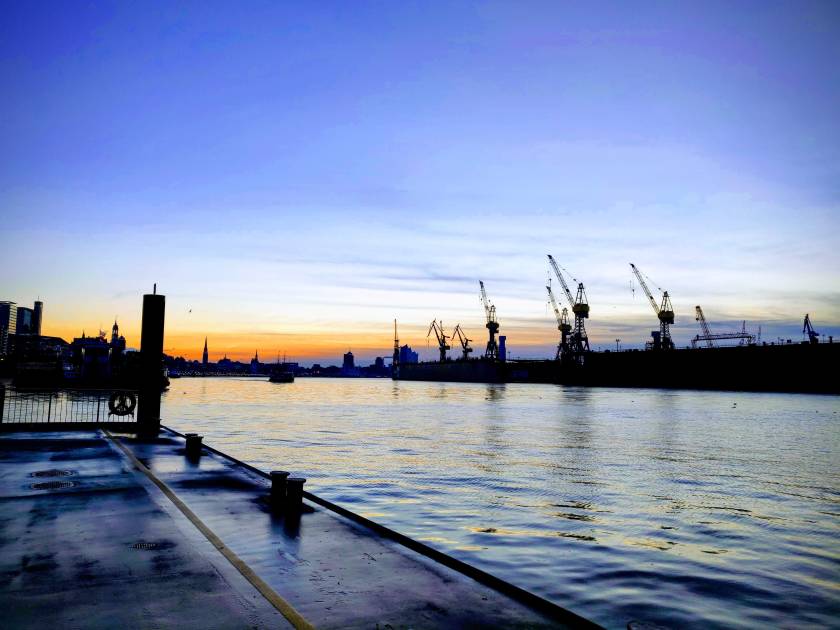


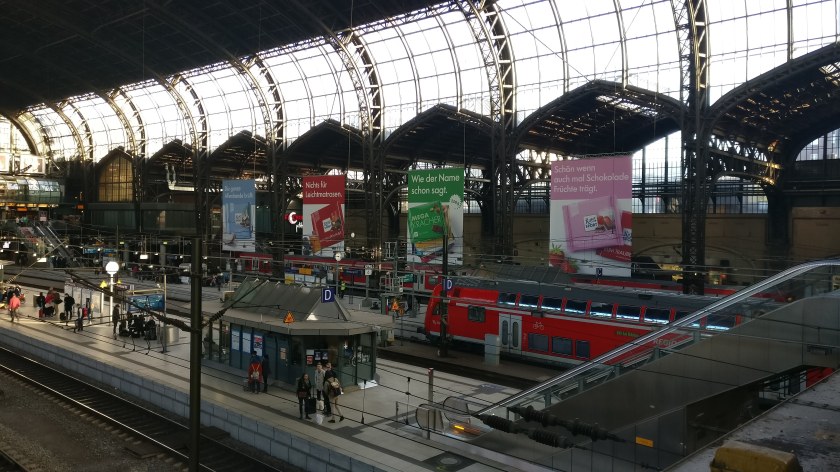
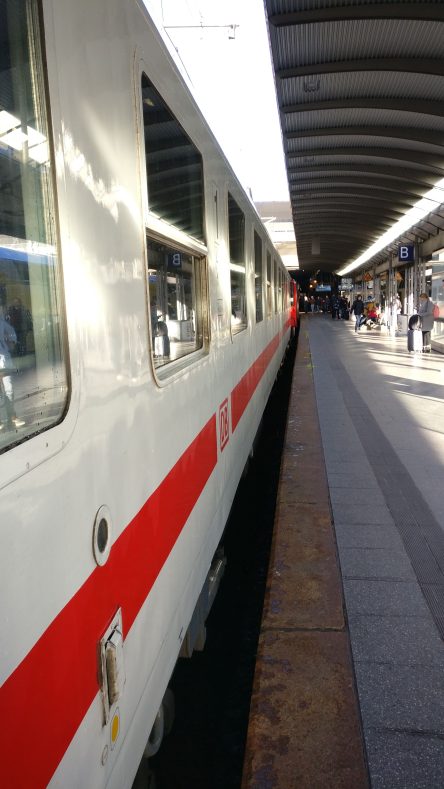


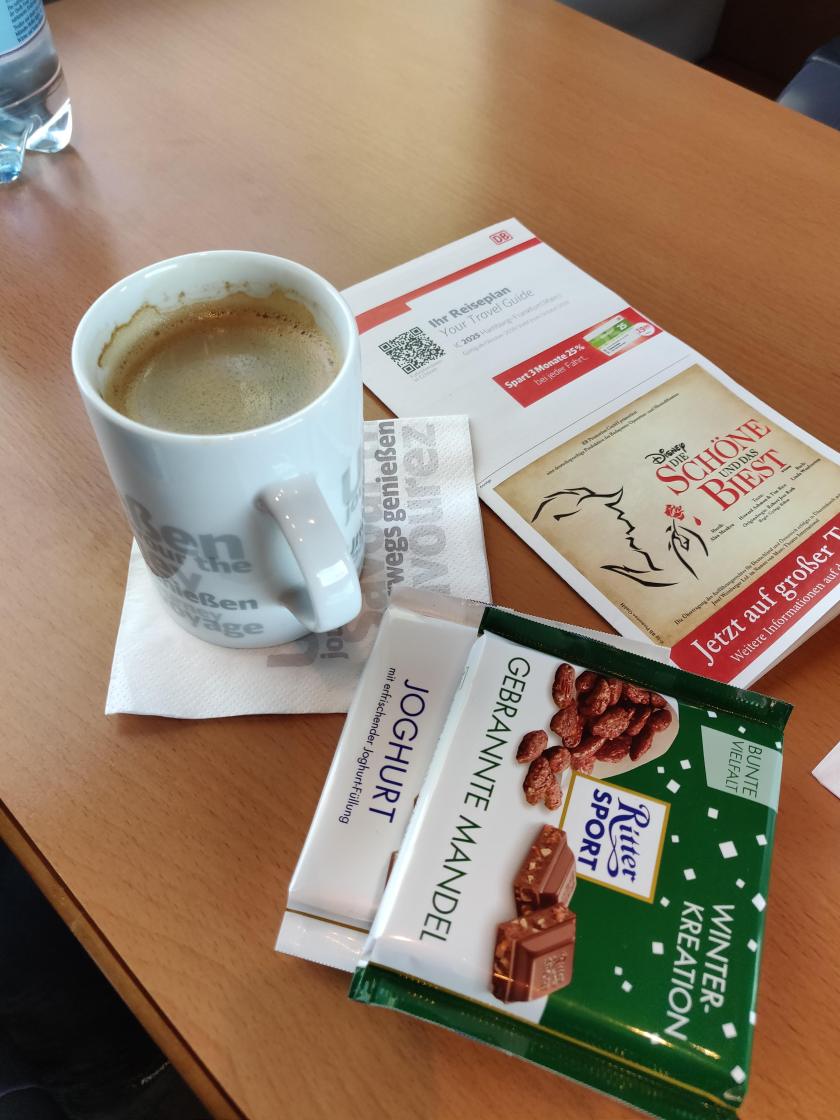
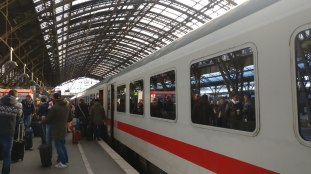
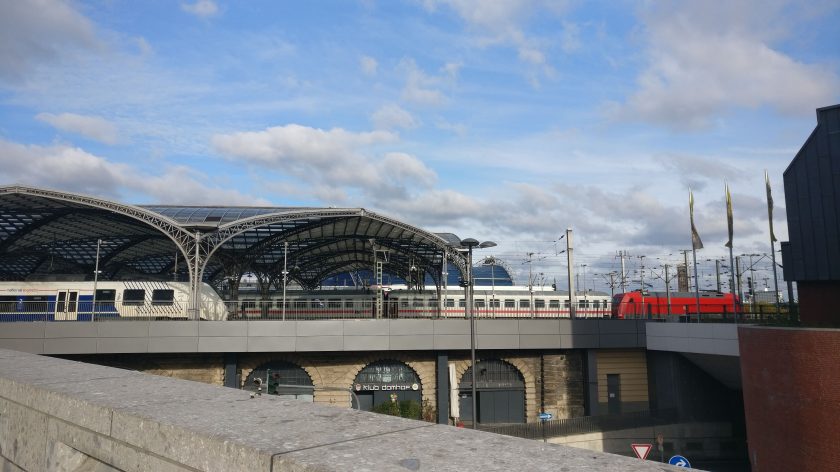
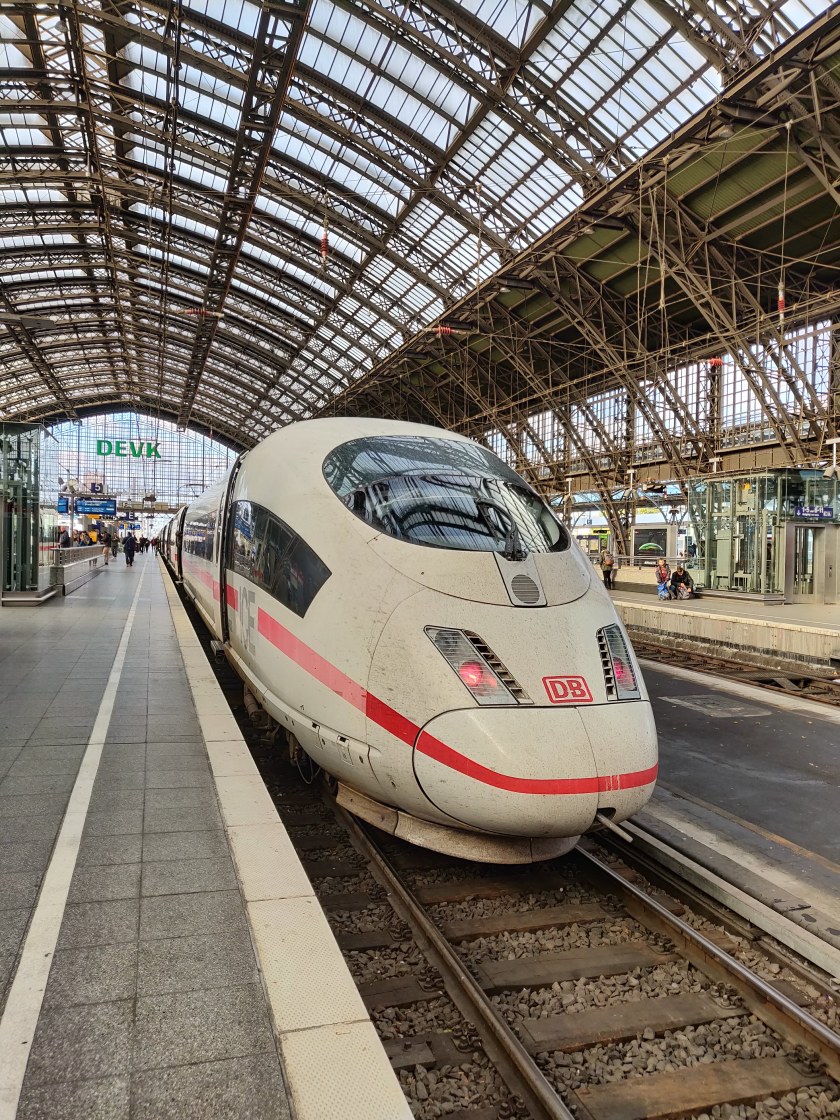


 The crossing – which lasts about 45 minutes – was passed with an exploration of the inside of the ship (boring, but snacks were procured for later), a visit to duty free (boring, but chocolate procured for later) and time spent on deck watching other shipping. Having been a miserable day in Copenhagen, it really was lovely by the time we were at sea. A few minutes before arrival in Puttgarden, there was a tannoy announcement instructing us to return to the car deck and we headed back down – naturally taking the opportunity to take plenty more photos. Safely ensconced in our seats, we discovered had a prime view of events as the front door opened on the ferry to let us roll off – last on, first off – into Puttgarden station just a few hundred metres from the quayside. There was a nominal border check at this point (despite this being an intra-Schengen service) as German police boarded to check papers. In the case of 1st class, they briefly glanced into the compartment before moving on – but they appear to have been more scrupulous with other passengers.


